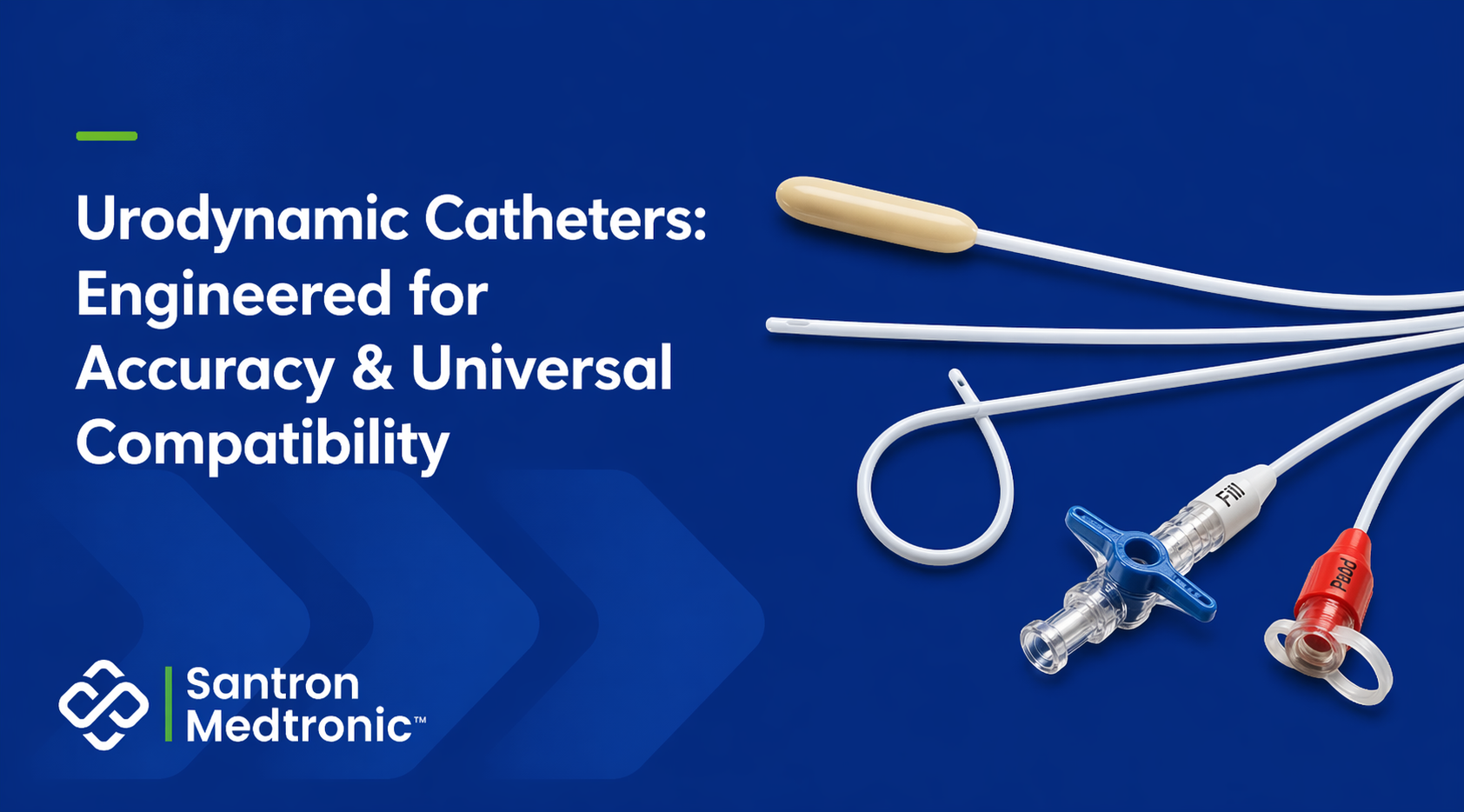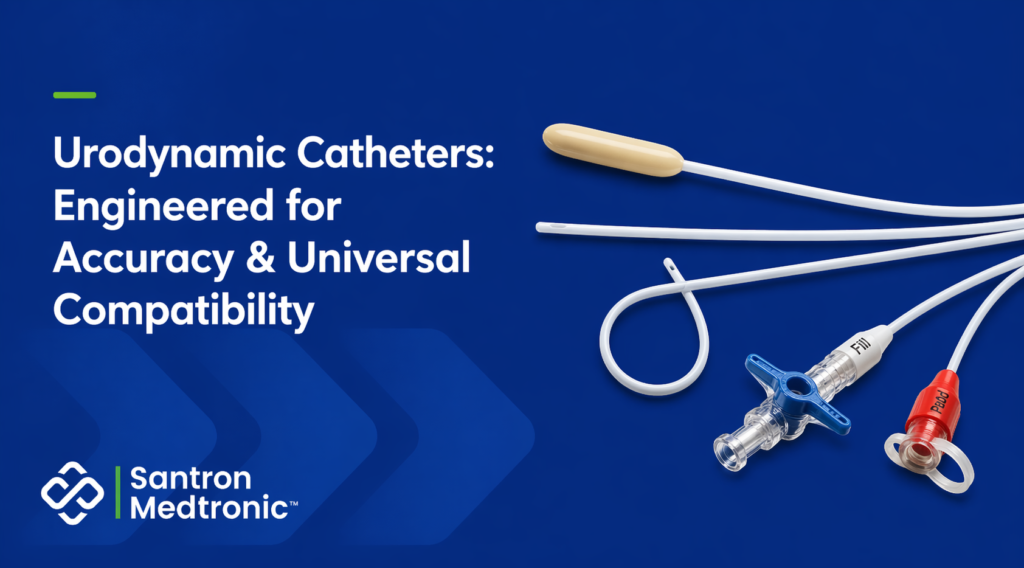
In urodynamic testing, accuracy depends not just on the system, but also on the quality and reliability of the consumables used during the procedure.
Urodynamic catheters are a critical part of this setup. They directly influence how pressure is measured, how stable the readings are, and how smoothly the procedure runs.
For clinicians and diagnostic centers already familiar with urodynamics, the focus is on performance, consistency, and how easily these consumables integrate into existing systems.
How Catheter Performance Impacts Diagnostic Accuracy
Urodynamic studies rely on precise measurement of vesical pressure (Pves), abdominal pressure (Pabd), and derived detrusor pressure (Pdet).
As explained in this guide to urodynamic testing, even small inconsistencies in pressure transmission can impact diagnosis.
This is where catheter quality becomes critical.
A well-designed catheter ensures:
- Stable pressure transmission
- Minimal signal loss
- Consistent readings throughout the procedure
In practical terms, this reduces artefacts and improves confidence in the results being recorded.
Types of Urodynamic Catheters and Their Function
Double Lumen Catheter
Double lumen catheters are commonly used in cystometry and pressure flow studies.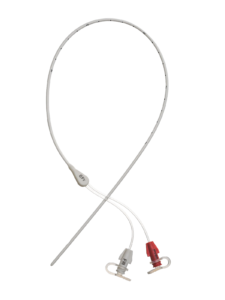
They feature two independent channels:
- One for bladder filling
- One for measuring vesical pressure
This allows simultaneous filling and monitoring without compromising accuracy.
For clinicians, this translates into a more streamlined workflow with fewer steps during the procedure.
Rectal Balloon Catheter
Rectal balloon catheters are used to measure abdominal pressure (Pabd).
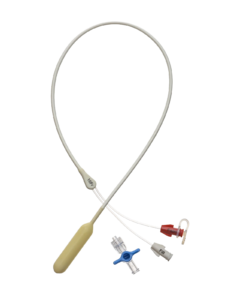
The balloon ensures:
- Stable positioning
- Reliable pressure transmission
- Reduced signal fluctuation
Accurate abdominal pressure measurement is essential for calculating detrusor pressure, which is a key parameter in urodynamic interpretation.
Without consistent Pabd data, the diagnostic value of the study is significantly reduced.
Designed for Smooth Clinical Workflow
Beyond compatibility, usability plays a major role during procedures.
Santron catheters are designed with:
- Color-coded identification for quick setup
- Smooth insertion for patient comfort
- Stable positioning during testing
These factors help reduce handling errors and improve procedural efficiency.
In busy urology setups, even small improvements in workflow can have a noticeable impact.
Consistency in Pressure Measurement
Consistency across cases is just as important as accuracy.
Variations in catheter performance can lead to inconsistent readings, which complicates interpretation.
High-quality urodynamic catheters ensure:
- Repeatable performance across patients
- Stable signal transmission
- Reduced artefacts in recordings
This aligns with broader clinical goals of improving diagnostic reliability, as also discussed in how accurate urology devices improve patient outcomes.
Single-Use, Sterile, and Reliable
Urodynamic catheters are designed for single use.
This ensures:
- Consistent performance for every procedure
- Reduced risk of cross-contamination
- Compliance with hygiene protocols
Each catheter is supplied sterile and ready for immediate use.
Why Compatibility Is a Key Decision Factor
Most hospitals and diagnostic centers already operate with established urodynamic systems.
Introducing new consumables should not disrupt existing workflows.
Santron urodynamic catheters are designed for seamless integration with:
- All standard urodynamic systems
- Pressure transducers
- Connecting accessories
The use of standardized Luer connectors ensures direct compatibility without the need for adapters or modifications.
This is particularly important for facilities already using systems like Santron urodynamics solutions or other global brands.
From an operational standpoint, this means:
- No dependency on a single OEM ecosystem
- No additional training or setup changes
- Immediate usability within existing infrastructure
For procurement teams, this flexibility reduces risk and simplifies decision-making.
Integration with the Larger Urodynamic Setup
Urodynamic catheters are one part of a broader diagnostic ecosystem that includes:
- Urodynamic systems
- Uroflowmeters
- Bladder scanners
For example, tools like the PC-based wired uroflowmeter and advanced bladder scanner complement urodynamic testing by providing additional diagnostic insights.
When all components work together seamlessly, the overall quality of diagnosis improves.
Making the Right Choice for Your Practice
Urodynamic catheters may be consumables, but their impact on diagnostic accuracy is significant.
The right catheter ensures:
- Reliable pressure measurement
- Consistent performance across procedures
- Seamless compatibility with existing systems
For any urodynamic setup, the ability to use consumables across different machines without operational friction is a major advantage.
This balance between performance and compatibility is what ultimately supports better clinical outcomes and more efficient workflows.
Explore urodynamic catheters or contact our team to find the right fit for your clinical requirements.
Frequently Asked Questions
- Are urodynamic catheters compatible with all systems?
Yes, they are designed with standard connectors to work with all major urodynamic systems, transducers, and accessories. - Why is compatibility important in urodynamic consumables?
It allows clinics to use the catheters with existing equipment without requiring modifications or additional components. - What is the role of a double lumen catheter?
It enables simultaneous bladder filling and pressure measurement during urodynamic studies. - Why is abdominal pressure measurement required?
It is used to calculate detrusor pressure, which is essential for accurate diagnosis. - Are these catheters reusable?
No, they are single-use and supplied sterile to maintain safety and consistency.